← All articles / About · 14 min read · Jun 16, 2026

Who Is Hristo Hristov — The Honest Story Behind This Blog

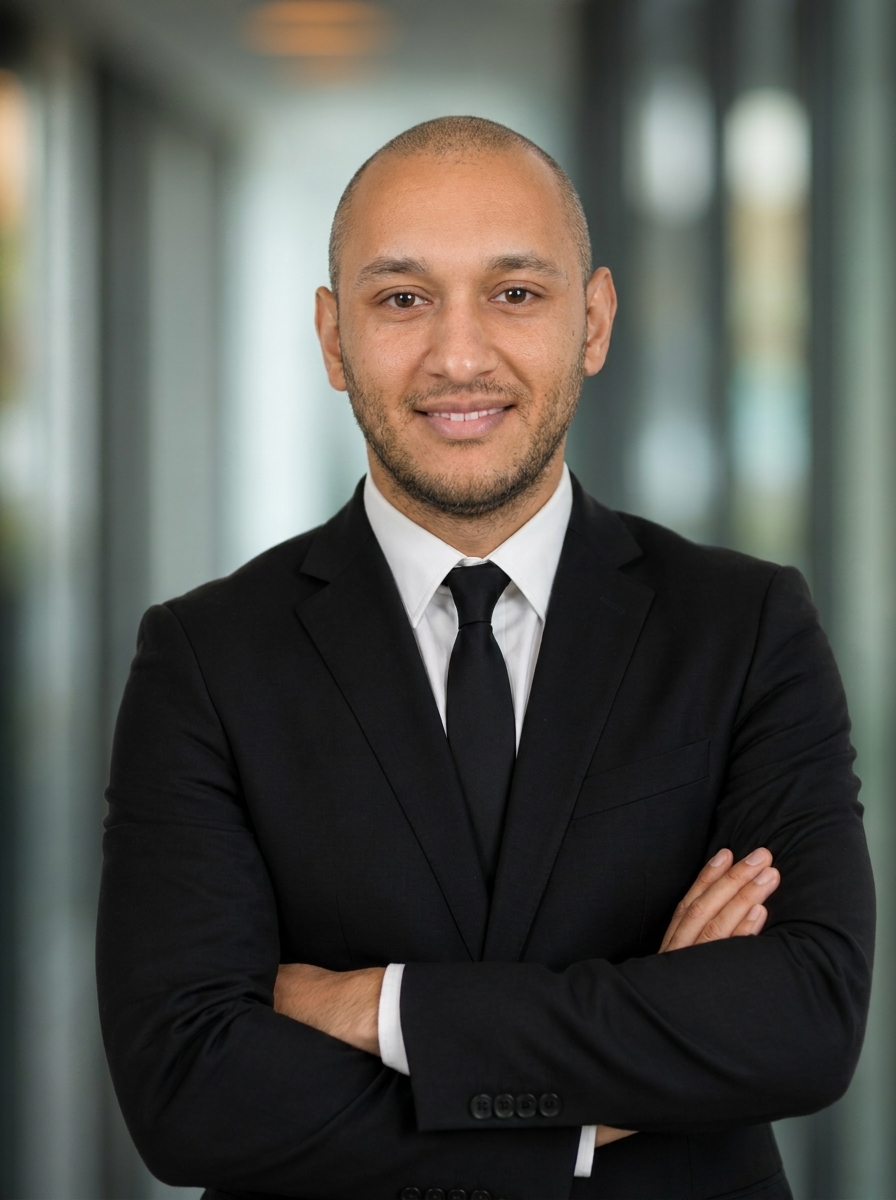
Hristo Hristov
Hristo Hristov
Growth Consultant · Fintech, Forex & Prop Firms

Growth Consultant · Forex, Prop Firms & Fintech · ,Cyprus

My name is Hristo Hristov. I’m a growth consultant for Fintech, based in Cyprus. I wrote this because I think transparency matters before any professional relationship starts — you should know exactly who you’re dealing with, how I think, what shaped my approach, and what I actually believe about this industry before we speak. No filtered version, no sales narrative. Just the full picture.
Some of the best-run projects I’ve worked on failed. Not because the product was wrong, not because the market wasn’t there — because the people involved let ego, emotion, and short-term thinking override the logic, rational thinking and data in front of them. I’ve watched businesses with real commercial traction, working systems, and clear numbers get quietly dismantled because someone couldn’t share the credit, or because a decision got made on a bad day and nobody had the standing to reverse it.

That taught me something more useful than any success has: rationality is the exception, not the default. Once you accept that, you stop being surprised by irrational decisions and start building systems that account for them. Everything in how I approach client work now — the diagnostic-first methodology, the documented frameworks, the measurable outputs — came directly from learning what happens when you don’t have those things in place.


How I ended up here

My background is in marketing across regulated financial services — fintech, forex brokers, CFD platforms, prop firms, payments. Not one vertical, not one channel, not one market. The work has spanned Europe, LATAM, Africa, and Southeast Asia, which means the playbook has had to adapt to different regulatory environments, different audience behaviors, and different acquisition economics in each.

The way that background was built was deliberate. It started with SEO and organic — because understanding how people search for and evaluate financial products is the foundation everything else sits on. Then paid acquisition, because you need results fast, revenue cant wait 6-12 months until organic traffic start to kick in. Then tracking and attribution, because I kept watching decisions get made on data that was confidently measuring the wrong thing. Then funnels and CRO, because driving traffic is a different problem from converting it, and most teams treat them as the same problem. Then growth systems — how you connect all of it into something that compounds rather than just runs. Each step wasn’t a career move. It was a question: I want to understand how this layer actually works before I recommend anything about it.

What that experience across channels and markets made clear was consistent: the gap between companies growing efficiently and companies spending significant budget without proportional results was almost never a product problem. It was a marketing architecture problem. Wrong channel mix. Funnels nobody had formally mapped. Content built for the wrong intent. Attribution setups measuring the wrong metric entirely. The same patterns, in different combinations, across most of the businesses I was seeing.

That’s what the consulting practice is built around — diagnosing exactly which layer the problem sits in before recommending anything. I’m based in Limassol, Cyprus. CySEC-regulated brokers make up a significant share of the global retail forex market, and being embedded in that ecosystem — same industry network, same regulatory environment, same conferences — gives you a different quality of context than working the sector remotely.


Why marketing, specifically

Most people I know in this industry ended up in marketing. I chose it. That sounds like a minor distinction but it shapes how you approach the work.

The reason I chose it is the stakes. Marketing is the variable most directly responsible for whether a good business survives or disappears. Not product quality, not the founding team, not the regulatory licence — those are table stakes. The broker with the better acquisition system wins the market. The prop firm that converts its challenge funnel 10 percentage points better than the competition compounds that advantage every month. A genuinely good product with poor or inefficient marketing will lose to an average product with sharp acquisition. I’ve watched it happen. The graveyard of forex businesses that had everything except marketing that worked is larger than most people in this industry want to admit.

In regulated financial services, that matters more than in most sectors. You can’t outspend your way to good results when you’re operating inside FCA or CySEC constraints. You can’t run the most aggressive creative. You can’t make the claims that would make conversion easy. Every limit on what you can do pushes the quality of the thinking further up the value chain. The brokers that grow efficiently in this environment do it by being smarter about the constraints, not by ignoring them.

That’s the work I find interesting. Not just the execution — the architecture. Building the system that produces funded accounts reliably, at a defensible cost, inside a compliance framework, across multiple channels and markets simultaneously.

“Every compliance constraint that looks like an obstacle is a filter — the broker that builds inside the rules ends up with something competitors can’t copy.”


Compliance is the moat, not the obstacle.

Most agencies treat regulation as a list of things they can’t do. FCA, CySEC, ASIC, MiCA — these environments define exactly what your competitors can and can’t do too. The financial brand that builds compliant acquisition infrastructure has a structural advantage over the one cutting corners, because the corner-cutter is always one policy update away from a suspended account or a regulatory warning. Compliance-first isn’t conservative. It compounds.

Audit before recommending. Every time. The standard agency approach: close the client, then figure out what the problem is. I run it the other way. Before suggesting a budget reallocation, before recommending a funnel rebuild, before claiming there’s an organic opportunity worth investing in — I look at the actual data. That’s not a positioning statement. It’s how every engagement is structured: the diagnostic comes first, the recommendation follows from what it finds.

Channel metrics are not business metrics. CPA tells you what a campaign costs. ROAS tells you what a channel returns. Neither one tells you whether the business is actually growing sustainably. The numbers that matter are LTV:CAC ratio, payback period, 90 and 180-day cohort retention, and revenue per acquired user at 12 months. Most marketing teams optimise for the metric that looks best in the monthly report — not the one that determines whether the unit economics work in 18 months. Those are different optimisation targets, and confusing them is expensive.

I work with businesses building something real. Not every brief is the right fit. The work I do connects marketing strategy directly to business outcomes — which only makes sense for businesses where long-term brand equity, customer lifetime value, and sustainable acquisition matter. Regulated financial services: fintech, forex brokers, prop firms, CFD platforms, payments businesses. Companies where the goal is a defensible, growing business — not a short-term acquisition spike that looks good in a quarterly deck.

Compliance
as moat

The broker that builds inside the rules ends up with something competitors can’t copy

Audit
before anything

Diagnose exactly where growth is leaking before recommending what to change

LTV over
CPA

Payback period and unit economics matter more than what the monthly report looks like

Right fit
only

Regulated financial markets only — where compliance is load-bearing, not cosmetic


The work

The work is structured as a four-tier ladder. Every engagement starts with a diagnostic audit — SEO, paid acquisition, funnel, or full-stack growth — that maps exactly where growth is leaking. The path after that depends on what the audit finds.

TierWhat it fixesWhen you need it
AuditIdentifies exactly where growth is leaking before any spend changesYou have a problem but don’t know which layer it’s in
SprintFixes the highest-impact bottleneck — implementation, not slide decksYou know the problem, you need it resolved in 4–8 weeks
RetainerOngoing optimization, oversight, and reporting month over monthThe foundation is right, you need consistent senior execution
FractionalSenior growth or marketing leadership without a full-time executive hireYou need someone who owns the number, not advises on it

I’ve worked across most significant markets: Europe, LATAM, Africa, Southeast Asia. The regulatory contexts differ, audience behavior differs, and what converts in the EU performs differently from Southeast Asia or Sub-Saharan Africa. The US is the exception — financial services advertising restrictions there make it a different category of problem entirely.

Book a Strategy Call →

Why I follow the technology closely

The way financial brands get discovered is changing faster than most marketing teams are tracking.

Eighteen months ago, a forex broker’s organic visibility was primarily a Google problem. Now it’s a Google problem and a ChatGPT problem and a Perplexity problem and a Google AI Overviews problem — all running simultaneously, each with different mechanics. When someone asks an AI assistant which prop firm to use or which broker is regulated in their country, the answer doesn’t come from the broker’s own site. It comes from whatever sources the model was trained on or can currently retrieve.

This cuts sharper in regulated financial markets because AI models are cautious about financial content. They’re more likely to cite authoritative sources, comparison sites, and well-structured editorial content than to recommend a broker directly. That creates a specific opportunity for businesses that understand how to structure content for AI citation rather than just traditional search — and most of the teams I talk to haven’t started thinking about it yet.

I find this genuinely interesting. Not because it’s worth noting as a trend, but because it changes what good content strategy looks like for this industry right now.


Why the physical work matters

Every morning before client work: a cold shower, then training. The session is MMA, open water swimming, or a weighted walk carrying 10 kilograms. This isn’t a lifestyle choice I’m asking you to find inspiring. It’s infrastructure.

Cold exposure forces a decision each morning — to do something uncomfortable on purpose before the day starts. That decision, made at 6am, sets a standard for how everything else gets approached. The discomfort isn’t the point. The consistency of choosing it is.

Swimming trains something gym work doesn’t. The environment removes every distraction — no phone, no music, nothing to manage except whether you stop or keep going. For anyone doing high-stakes work, the ability to stay composed under sustained pressure isn’t a personality trait. It’s trained, and open water gives you the conditions to train it properly.

MMA is problem-solving under physical stress. The technical complexity demands full presence — you can’t think about a client situation while someone is trying to submit you. That enforced focus, the ability to operate clearly when conditions are uncomfortable, carries directly into the work. Negotiations, difficult conversations, decisions under time pressure. All of it gets easier when you’ve already spent an hour doing something genuinely hard.

The weighted walks are simpler: 10 kilograms, an hour, no calls. Most of the strategic clarity in client work comes from these, not from sitting at a desk.

The reason this is here: the people I work best with understand that consistent output requires consistent inputs. Month six should look like month one. That doesn’t come from motivation — it comes from having built the structure that makes inconsistency harder than consistency.


What you’ll find on Hristo Hristov’s blog

Every article on this blog is written for marketing teams, CMOs, and founders running acquisition in regulated financial markets.

The topics run across SEO and organic strategy, paid acquisition, funnel and conversion, growth systems, and AI search visibility.


If you’re considering working together

The work is built for businesses with an active marketing budget and a real acquisition problem in a regulated market.

The first step is a diagnostic conversation — not a sales call. A genuine discussion about what’s actually happening in your funnel or your channels. If the fit isn’t right, I’ll say so in the first call.

What I’m not: an agency, a freelance executor, or someone who takes every brief and figures out the strategy later.

Work together

Need a growth strategy built for regulated financial markets?

All engagements start with a diagnostic conversation — not a sales call.

Book a Strategy Call →

No agency pitch  ·  No commitment required

Hristo Hristov is a growth consultant for forex brokers, prop firms, and regulated fintech businesses. Services cover SEO, paid acquisition, conversion optimisation, and fractional growth leadership. All engagements start with a diagnostic audit. Based in Cyprus.

FAQ — Who Is Hristo Hristov

Who do you work with?

Forex brokers, CFD platforms, prop firms, and payments businesses. Specifically the CEOs,CMOs or Head of Marketing who is managing a serious budget and needs a senior growth partner — not an agency running checklists. I do not work with iGaming businesses.

Are you an agency or a solo consultant?

Solo consultant. That is the point. When you hire me, I do the work — not a junior account manager who joined six months ago. The trade-off is that I take on a small number of clients at any one time, which means availability is limited.

What does working together actually look like?

Every engagement starts with a diagnostic — an audit that finds exactly where growth is leaking before recommending anything. From there, most clients move into a Sprint to fix the biggest problem, then a Retainer for ongoing oversight. Nothing is sold before the audit is done.

Where are you based ?

Based in Cyprus. I work remotely with clients across Europe, MENA, and beyond. Time zone has never been an issue.

How do I know if we’re a good fit?

Book a 30-minute discovery call. No pitch deck, no proposal until we’ve spoken. If there is no obvious fit I will tell you in the first ten minutes — I would rather save both of us the time.

Do you work with early-stage companies or only established businesses?

Both, but the entry point is different. If you have an existing product, some traffic, and a marketing budget — a diagnostic audit is the right starting point. If you are earlier than that, the most valuable thing is usually a Strategy Hour: a focused 90-minute session on your specific growth problem, no audit required. The stage does not matter as much as whether there is a clear question worth answering.

Hristo Hristov
Hristo Hristov
Growth Consultant · Fintech, Forex & Prop Firms

I work with forex brokers, prop firms, and regulated fintech businesses on acquisition, conversion, and growth. Every engagement starts with a diagnostic — finding exactly where growth is leaking before recommending what to change. Based in Limassol, Cyprus.

Full story →
Work together

Need a growth strategy built for regulated financial markets?

All engagements start with a diagnostic conversation — not a sales call.

Book a Strategy Call →

No agency pitch  ·  No commitment required